
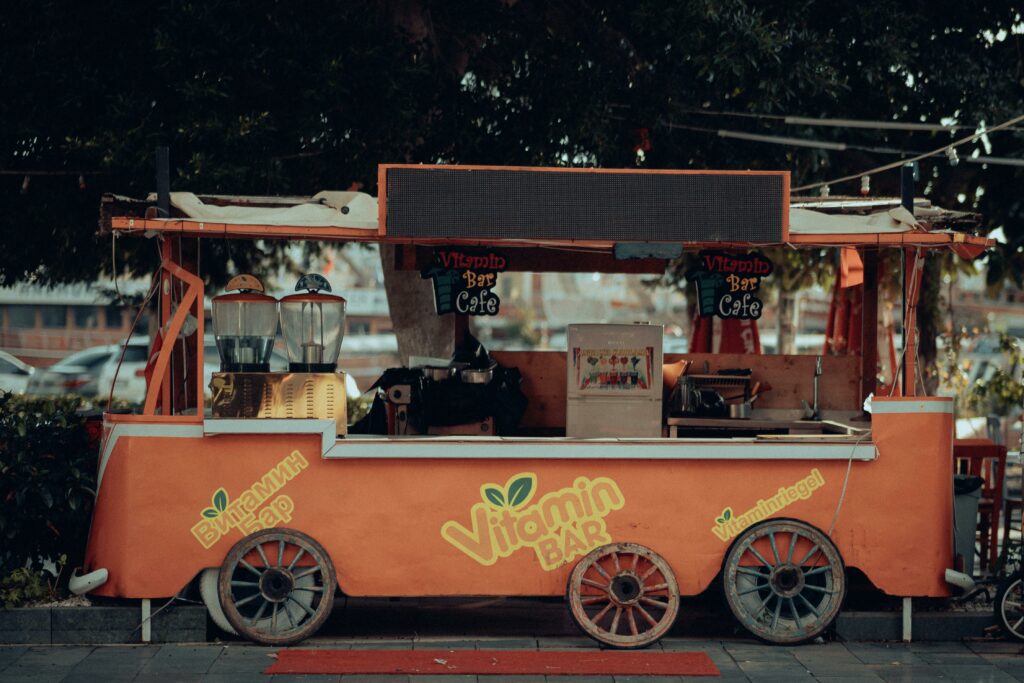
If you sell food, fruit, or beverages from a mobile cart or vehicle in India, every rupee of operating cost comes directly out of your daily income. Petrol costs, maintenance bills, and fuel price fluctuations are not abstract business risks for a street vendor. They are daily reality. An electric food cart vehicle or electric fruit vendor vehicle offers a real alternative, but only if it matches how you actually work.
This guide is written specifically for vendors, not fleet operators or logistics companies. It covers the vehicles available, what they cost, how they are charged, and what questions to ask before buying.
What Kinds of Electric Vendor Vehicles Are Available in India in 2026?
The electric vendor vehicle category in India covers several purpose-built configurations. Understanding which type fits your business is the first step.
Electric food cart three-wheeler: A three-wheeled electric vehicle with a purpose-built food preparation or display unit mounted on the cargo bed. Used for: hot food service, snacks, beverages, and mobile tiffin service.
Typical features:
- Insulated or stainless steel service counter
- Optional LPG connection point for cooking
- Side-opening service hatches
- Under-counter storage
- Canopy or weather cover over the service area
Electric fruit and vegetable cart: Open or covered cargo bed configured for fresh produce display and sale. Used for: fruit vendors, vegetable sellers, and dairy product distribution.
Typical features:
- Open display shelving
- Weighing scale mount point
- Side display rails for hanging produce
- Optional canopy for shade and weather protection
Electric chaat and snack cart: Compact three-wheeler or converted two-wheeler configured for chaat, pani puri, or similar quick-service food formats. Used for: high-frequency urban roadside locations.
Electric multipurpose vendor vehicle: Flat-bed or semi-enclosed body that can be configured for different vendor uses depending on the day or season. Maximum flexibility for vendors with multiple product lines.
The Ekotejas three-wheeler product range includes vendor and utility configurations built specifically for the daily-use demands of Indian street commerce.
The Daily Cost Comparison: Electric vs Petrol for a Vendor Vehicle
For a vendor covering 30 to 50 km daily across their route:
Petrol vendor vehicle (30 km/l at Rs. 105/l): Daily distance: 40 km Daily petrol: 1.3 litres Daily fuel cost: Rs. 137 Monthly fuel cost (26 days): Rs. 3,562 Annual fuel cost: Rs. 42,744
Electric vendor vehicle (25 km per kWh at Rs. 8/kWh): Daily distance: 40 km Daily electricity: 1.6 kWh Daily electricity cost: Rs. 12.80 Monthly electricity cost (26 days): Rs. 333 Annual electricity cost: Rs. 3,994
Annual savings: approximately Rs. 38,750
For a vendor earning Rs. 800 to Rs. 1,500 per day net, an annual saving of nearly Rs. 39,000 in fuel costs represents between 26 and 49 additional working days of net income per year. This is the financial case that makes electric vendor vehicles worth serious consideration.
Charging an Electric Vendor Vehicle: What Vendors Need to Know
Charging is the most common practical concern for vendors considering the switch to electric. Here is how it works in practice.
Where do you park overnight? Most vendors who own their vehicles park at home or at a fixed location. A standard 15-amp home socket charges most electric three-wheelers from near-empty to full in 6 to 8 hours overnight. No special installation is required in most cases.
What if you park at a market or vendor lot? Some wholesale markets and vendor parking areas in larger Indian cities have begun installing commercial charging points. If your parking location does not have a socket, speak to the market authority about installation. A basic 15-amp socket installation typically costs Rs. 500 to Rs. 1,500, including wiring from a nearby connection point.
What about mid-day top-up charging? If your route covers more than 60 km and your vehicle has a range of 80 km, you will occasionally want a mid-day partial charge. A 2-hour top-up from a standard socket adds approximately 20 to 25 km of additional range. Identify one or two locations on your route where you have permission to plug in for an hour or two if needed.
Monsoon and rain charging: Do not charge the vehicle outdoors in heavy rain. Use a covered charging point or charge the previous evening before the weather deteriorates. The vehicle’s IP rating covers riding in rain; the charging process requires a dry connection point.
What to Look for in an Electric Food Cart or Fruit Vendor Vehicle
Beyond the standard vehicle specifications, vendor-specific requirements include:
Load capacity for your product: Fruit and vegetable sellers typically carry 200 to 400 kg of produce. Food service vendors carry lighter loads but need structural support for cooking equipment. Match the vehicle’s rated payload to your specific product load.
Body access and service layout: A food cart that requires the vendor to walk behind the vehicle to serve customers from the street is poorly designed for Indian roadside service. Look for vehicles with side or rear service access that place you at the customer-facing side of the transaction.
Weather protection: A fixed canopy or the ability to mount a portable canopy is essential for both product protection and the vendor’s own comfort during hot or rainy seasons.
Storage security: At the end of the day, can you leave produce, equipment, or stock securely in the vehicle overnight? Lockable storage compartments or the ability to install a simple padlocked cover matter for daily operational security.
Mobility in congested areas: Electric vendor vehicles with a tight turning radius are better suited to narrow market lanes and congested street locations. Confirm the turning radius specification if your operating location involves tight manoeuvring.
For vendors exploring the complete Ekotejas commercial vehicle range across both two and three-wheeler categories, the Ekotejas product catalogue provides full specification listings.
Common Questions Vendors Ask Before Buying
“What if the vehicle breaks down mid-route?” This is the most important after-sales question to ask any dealer. Know in advance: who do you call, how long does the service take, and is there a loan vehicle provision during repairs? For a vendor whose daily income depends on the vehicle, downtime is not an inconvenience. It is a revenue loss.
“Can I get financing without a formal income proof?” Many NBFCs and microfinance institutions offer vendor vehicle loans with relaxed documentation requirements for informal sector workers. GST registration, bank account statements, and an Aadhaar card are often sufficient. Ask your dealer about finance partners who specialise in vendor and small trader loans.
“Will the vehicle handle the weight of my LPG cylinder and cooking setup?” Confirm the payload specification with your dealer and provide the actual weight of all equipment you plan to mount. A good dealer will help you calculate whether the vehicle can handle your specific load configuration.
Frequently Asked Questions
The electric vehicle powers mobility only. Cooking is handled by LPG or induction equipment mounted on the cart, powered separately. The vehicle’s motor and battery are not connected to the cooking appliances.
Electric fruit vendor three-wheelers in India range from approximately Rs. 1.2 lakh to Rs. 2.5 lakh on-road, depending on body configuration, battery chemistry, and applicable subsidies.
Vendor-use electric three-wheelers may qualify if they meet the technical certification requirements of the scheme. Confirm eligibility with your dealer for the specific model you are considering.
Under full payload conditions (200 to 350 kg of produce plus driver), real-world range typically falls between 60 and 90 km depending on battery capacity, terrain, and road conditions.
Small rooftop solar panels can be mounted on vendor vehicle canopies and provide a modest supplemental charge during stationary sales hours. The contribution is small (1 to 3 km of additional range per hour of full sun) but can reduce the frequency of mid-day top-up charging on longer routes.