
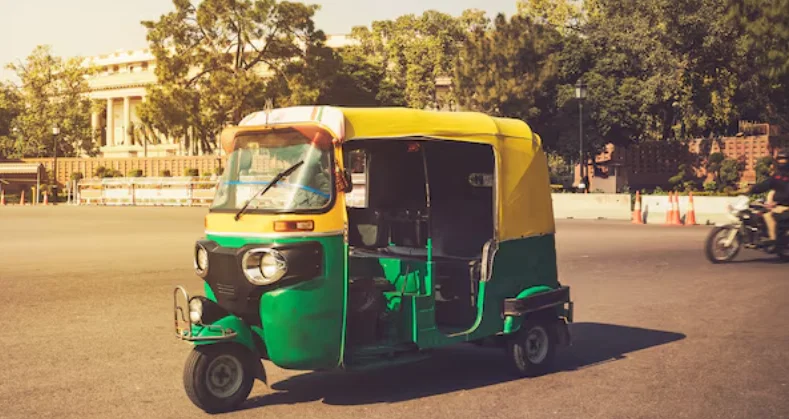
If you searched “e rickshaw price 2026”, you are not browsing. You are buying, or close to it. This guide skips the background on electric vehicles and gets directly to what you came for: what e-rickshaws cost in India right now, what is included in that price, and how to evaluate whether the number in front of you is fair.
Current E Rickshaw Price Ranges in India: 2026 Market Overview
E rickshaw prices in India in 2026 fall across a wide range depending on vehicle type, battery chemistry, payload rating, and intended use. Here is the segment breakdown:
Passenger e-rickshaw (standard 4-seater):
- Lead-acid battery configuration: Rs. 95,000 to Rs. 1,30,000 ex-showroom
- Lithium-ion battery configuration: Rs. 1,30,000 to Rs. 1,80,000 ex-showroom
- On-road price (add registration, insurance, permit fees): approximately 15 to 20% above ex-showroom
Cargo e rickshaw (loader/flat-bed):
- Lead-acid: Rs. 1,10,000 to Rs. 1,50,000 ex-showroom
- Lithium-ion: Rs. 1,40,000 to Rs. 2,00,000 ex-showroom
- On-road: add 12 to 18% for commercial goods vehicle registration costs
Closed cargo e rickshaw (van body):
- Lithium-ion standard: Rs. 1,60,000 to Rs. 2,50,000 ex-showroom
- On-road: add 12 to 18%
Special-purpose e-rickshaw (food cart, utility, water tank):
- Prices vary significantly by body configuration: Rs. 1,50,000 to Rs. 3,50,000, depending on specialisation
These are market ranges, not specific model prices. Actual pricing from any manufacturer depends on their specific battery supplier, motor specification, and margin structure.
The Ekotejas three-wheeler commercial range sits within the mid-segment of these ranges, positioned on durability and service reliability rather than minimum-cost positioning.
What the E Rickshaw Price Actually Includes: A Line-by-Line Breakdown
When a dealer quotes you a price for an e-rickshaw, understand exactly what that number covers.
Ex-showroom price includes:
- The vehicle itself (chassis, body, motor, battery, basic accessories)
- GST at 5% for electric vehicles
Ex-showroom price does NOT include:
- Road tax (varies by state, typically 0 to 6% of vehicle cost for EVs)
- Registration charges at RTO (varies by state and vehicle category)
- Third-party insurance (mandatory, typically Rs. 4,000 to Rs. 8,000 annually for three-wheelers)
- Dealer handling charges (Rs. 2,000 to Rs. 5,000 depending on dealer)
- Permit fees for commercial passenger or goods operation
- Any accessories not listed in the standard specification
Always request an itemised on-road price quote that lists each charge separately before comparing prices across dealers or manufacturers.
How Subsidies Affect the E Rickshaw Price You Actually Pay in 2026
The final price a buyer pays in 2026 is affected by both central and state subsidy programmes. Here is how to understand your subsidy entitlement:
PM E-DRIVE (central scheme): The PM E-DRIVE scheme provides per-vehicle incentives for certified electric three-wheelers. The incentive amount depends on the vehicle’s battery capacity and technical specifications. For certified passenger e-rickshaws in the standard segment, the central incentive in 2026 ranges from approximately Rs. 10,000 to Rs. 25,000 per vehicle.
This incentive is applied at the point of purchase. The dealer submits the claim and reduces your invoice price directly. You do not claim this separately.
State subsidies: States including Delhi, Maharashtra, Gujarat, Andhra Pradesh, Rajasthan, and Uttar Pradesh offer additional purchase incentives for electric three-wheelers. These range from Rs. 5,000 to Rs. 30,000 per vehicle and have specific eligibility conditions, including maximum vehicle price caps and buyer category requirements.
Stacking subsidies: In states with both active central and state incentives, you may be able to claim both. Confirm this with your dealer for your specific state and RTO location before purchasing.
Important caution: Not every vehicle qualifies for every subsidy. Subsidy eligibility requires the vehicle to carry specific certifications and meet defined technical standards. A cheaper uncertified e-rickshaw may not qualify for any subsidy. After subsidies, a certified vehicle that qualifies for Rs. 35,000 in combined incentives may end up costing less than a nominally cheaper uncertified alternative.
For buyers in Andhra Pradesh specifically, local dealer proximity and regional after-sales support are practical purchase considerations alongside price. The Ekotejas Axle Pro represents the brand’s commitment to the mid-segment buyer for whom reliability and service access matter as much as upfront price.
Lead-Acid vs Lithium-Ion: How Battery Choice Affects Total E Rickshaw Price Over Time
The battery chemistry choice is the single most important price decision in e-rickshaw purchasing. Here is why the cheaper upfront option is often the more expensive long-term choice.
Lead-acid battery e rickshaw:
- Lower purchase price by Rs. 30,000 to Rs. 50,000
- Battery replacement is typically required every 12 to 18 months under daily commercial use
- Replacement cost: Rs. 18,000 to Rs. 25,000 per replacement
- Over 4 years: 2 to 3 replacements = Rs. 36,000 to Rs. 75,000 in battery costs alone
- A heavier battery reduces range and increases motor load
Lithium-ion battery e rickshaw:
- Higher purchase price by Rs. 30,000 to Rs. 50,000
- Battery lifespan under daily commercial use: 3 to 4 years before significant degradation
- Over 4 years: 0 to 1 replacement
- A lighter battery improves range and reduces motor strain
Four-year total battery cost comparison: Lead-acid additional cost: Rs. 36,000 to Rs. 75,000 Lithium-ion additional cost: Rs. 0 to Rs. 25,000
The lithium-ion premium at purchase pays back through avoided battery replacements within the first two years of operation in most commercial use cases.
Where to Buy: Authorised Dealer vs Local Assembler
The e rickshaw market in India includes a significant number of locally assembled vehicles that are sold at prices below certified manufacturer vehicles. Understanding the risk profile of each source is essential.
Authorised manufacturer dealers:
- Certified vehicle with ARAI or iCAT approval
- Subsidy eligibility confirmed
- Warranty backed by the manufacturer
- Spare parts availability through the authorised network
- Higher upfront price, lower risk
Local assemblers:
- Lower upfront price
- Often no type-approval certification
- Not eligible for central or state subsidies
- No manufacturer warranty (dealer may offer an informal guarantee)
- Spare parts may be non-standard and difficult to source
For commercial operators whose income depends on vehicle uptime, the risk of an uncertified local assembly vehicle is concentrated precisely where it hurts most: availability of parts and reliability of the vehicle under sustained daily use.
The Ekotejas product overview provides a reference point for certified manufacturer pricing and available models as a comparison baseline.
Frequently Asked Questions
Certified passenger e-rickshaws with lead-acid batteries are available from approximately Rs. 95,000 to Rs. 1,10,000 ex-showroom from established manufacturers. On-road prices including all charges are typically Rs. 1,10,000 to Rs. 1,35,000.
Lead-acid replacement packs typically cost Rs. 18,000 to Rs. 25,000 at current market rates. Lithium-ion replacement packs range from Rs. 35,000 to Rs. 65,000, depending on capacity.
Ex-showroom price is typically fixed by the manufacturer. Dealers may offer flexibility on accessories, handling charges, or extended warranty packages. Focus negotiation on total on-road price and value additions rather than the ex-showroom base price.
Some NBFCs offer low or zero-down-payment loan products for e-rickshaws under government-linked schemes. Eligibility typically requires identity and income documentation. Confirm with your bank or NBFC.
Yes. Road tax rates, permit fee structures, and applicable state subsidies vary by state, which means the on-road price for the same ex-showroom vehicle can differ by Rs. 10,000 to Rs. 30,000 between states.