
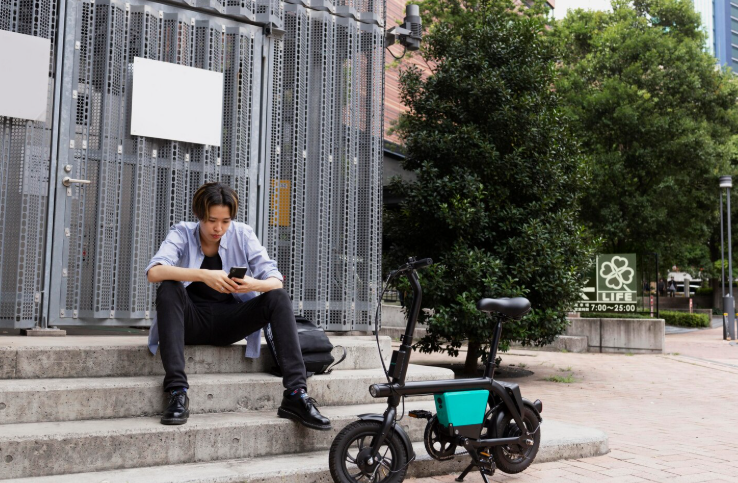
Here is the honest version of the electric bike-for-daily-commute conversation: most buyers do not need the fastest scooter, the longest range, or the most app integrations. They need a vehicle that starts every morning, covers their commute without anxiety, charges overnight without incident, and does not strand them when the service centre is 40 kilometres away. That is a different set of requirements than what most EV marketing talks about.
This guide is built around that honest version.
The Four Commute Types and What Each One Demands
Your commute type should determine your scooter selection, not the other way around.
Type 1: The Urban Short Commuter (under 30 km daily, city roads)
Requirements: Nippy acceleration, good braking, manageable weight for parking, reliable range above 60 km per charge as a buffer. Battery size matters less than motor responsiveness and braking quality. After-sales proximity is of high importance.
Type 2: The Mid-Distance Rider (30 to 60 km daily, mixed roads)
Requirements: Lithium-ion battery with 80 to 100 km real-world range, stable high-speed handling, comfortable seating for 45 to 60 minutes of riding. Battery warranty becomes a key decision factor at this usage level because charge cycles accumulate faster.
Type 3: The Heavy-Use Commuter (60 to 100 km daily)
Requirements: Battery capacity of 3.0 kWh or above, possibility of mid-day top-up charging at workplace, strong payload rating if carrying goods or regular pillion. This rider should also evaluate fast-charging capability (0 to 80% in under 3 hours).
Type 4: The Commercial Daily Rider (delivery, vendor, cargo use)
This is a different category entirely. The requirements shift to payload capacity, durability over high daily mileage, and total cost of ownership over 3 to 5 years. Styling and connectivity are irrelevant. For this buyer, the Ekotejas three-wheeler product range is a more appropriate place to start than personal scooter comparisons.
What Makes a Daily Commute Electric Bike Different From a Weekend Ride
A scooter used daily for commuting faces a stress profile that a weekend ride vehicle does not. Here is what that means in practice:
Daily charge cycles add up fast. A rider covering 40 km per day on a scooter with a 60 km real-world range charges the battery once daily. Over a year, that is 365 full charge cycles. A quality lithium-ion battery is rated for 500 to 700 full charge cycles before significant capacity degradation. This means a heavy commuter will see measurable range reduction within 18 to 24 months if not managing partial charging habits.
Best practice: Charge to 80% for daily use and only charge to 100% when you genuinely need the full range. This simple habit extends battery life significantly.
Braking systems wear faster on daily commute routes. City commuting involves far more braking events per kilometre than highway riding. Drum brakes in particular need periodic adjustment and eventual shoe replacement. Budget for this in your annual maintenance estimate.
Suspension takes more punishment on uneven urban roads. Telescopic front forks are a minimum standard for daily commute use. Scooters with only rubber suspension buffers at the rear are not built for potholed city streets used day after day.
The Ekotejas Axle Pro is built with these daily-use stress factors as engineering requirements, not as features added for marketing.
A Practical Morning Routine Checklist for Electric Commuters
Switching from petrol to electric changes your morning habits. Here is what a reliable daily routine looks like:
- Plug in the scooter every night before bed. Do not rely on remembering to charge on the morning of use.
- Check battery percentage each morning before leaving. Build a personal threshold: never leave with under 30% without a plan.
- Keep the charging cable in the under-seat storage. If charging away from home becomes necessary, you are ready.
- Note any unusual sounds, vibration, or acceleration response changes. These often signal issues before they become failures.
- Check tyre pressure weekly. Electric scooters are heavier than equivalent petrol scooters due to the battery, and correct tyre pressure directly affects range and handling.
Service and Maintenance: What Daily Use Actually Costs
One of the underrated advantages of using an electric bike for daily commute is the reduced service frequency and simpler maintenance profile.
What you will not need with an electric scooter:
- Engine oil changes
- Air filter replacements
- Spark plug replacements
- Carburettor or fuel injector servicing
- Exhaust system maintenance
What you will need:
- Annual brake inspection and adjustment
- Tyre rotation and replacement (typically every 15,000 to 20,000 km)
- Battery terminal cleaning and connection check (annually)
- Suspension check and fork oil top-up if applicable (every 2 years)
Annual servicing cost for a well-maintained electric scooter used for daily commuting typically runs between Rs. 1,000 and Rs. 2,500 per year. For petrol equivalents, the same figure is typically Rs. 4,000 to Rs. 7,000 per year.
Browse the Ekotejas two-wheeler product range to compare models based on service accessibility and maintenance specifications.
The Commuter’s Non-Negotiable List Before Purchase
Before finalising any electric bike for daily commute use, confirm the following in writing or in person:
- Real-world range under mixed load (not ideal test conditions)
- Battery warranty in years and charge cycles, whichever ends first
- Distance to the nearest authorised service centre from your home
- Spare parts availability and typical wait time for common replacements
- Charging time on your home socket type (5-amp vs 15-amp)
- Total on-road price including all taxes, registration, and insurance
No amount of features or aesthetics compensates for a gap in any of these six points for a daily commute buyer.
Frequently Asked Questions
Under real-world Indian commute conditions with mixed traffic, moderate load, and typical road quality, most current mid-segment electric scooters deliver 65 to 90 km per charge. Higher claims should be verified with certified test data.
Most certified electric scooters carry an IP rating that covers splash resistance. Riding in heavy rain is generally safe, but submerging the scooter in flooded roads or leaving it exposed to standing water is not recommended. Confirm the IP rating with your dealer.
Daily use at full charge cycles will result in measurable capacity degradation over 2 to 3 years. Maintaining a charging habit of 20% to 80% for regular days and reserving 100% charges for long trips significantly extends battery lifespan.
This depends on motor torque, not wattage alone. For hilly daily commutes, look specifically for scooters with a torque rating of 80 Nm or higher and confirm the hill-start capability during the test ride.
Calculate your average daily distance, add 30% as a safety buffer for range, and use that as your minimum real-world range requirement. Do not use the manufacturer’s claimed range as your planning figure.