
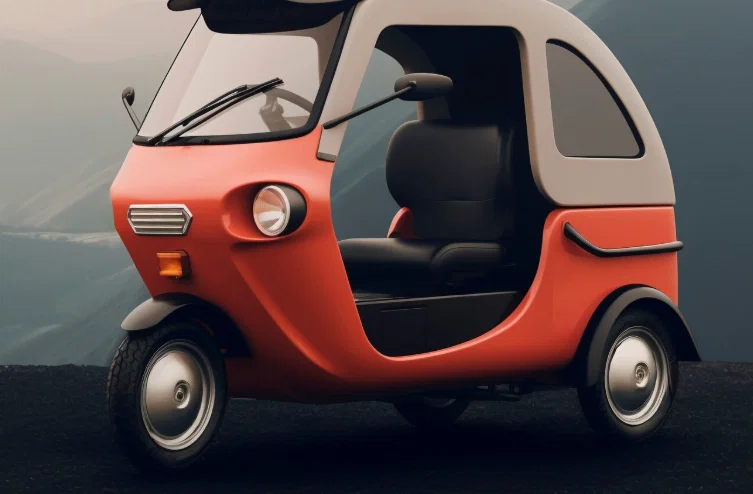
The auto rickshaw has been the backbone of Indian urban last-mile transport for decades. It is the vehicle that gets people from the metro station to their home, from the market to the hospital, from the railway platform to the colony gate. It operates in every city, every town, and most larger villages in India. And in 2026, the version of that vehicle running on petrol or CNG is increasingly being replaced by one that runs on electricity.
The electric auto rickshaw India market is not a pilot programme or a government showcase. It is a functioning commercial ecosystem with hundreds of thousands of registered vehicles, multiple established manufacturers, a growing service infrastructure, and a financial case strong enough to drive adoption without subsidy dependency in high-mileage operating environments.
This guide covers what drivers, fleet owners, and investors need to understand before entering this market.
The Financial Case for Drivers: Why the Switch Makes Sense
For a driver running an auto rickshaw commercially in an Indian city, the decision to switch to electric is primarily a fuel cost decision. Here is the calculation in plain numbers.
CNG auto rickshaw covering 120 km per day: CNG consumption at approximately 25 km per kg. Daily CNG consumption: 4.8 kg. At Rs. 90 per kg: daily fuel cost Rs. 432. Monthly fuel cost (26 working days): Rs. 11,232. Annual fuel cost: Rs. 1,34,784
Electric auto rickshaw covering 120 km per day: Energy consumption at approximately 12 km per kWh. Daily electricity consumption: 10 kWh. At Rs. 8 per unit (home or commercial charging): daily electricity cost Rs. 80. Monthly electricity cost (26 working days): Rs. 2,080. Annual electricity cost: Rs. 24,960
Annual saving per vehicle: approximately Rs. 1,09,824
For a driver who owns their vehicle, this saving directly improves monthly net income. For a fleet operator running five vehicles, the aggregate saving exceeds Rs. 5.4 lakh per year on fuel alone, before accounting for the reduced servicing frequency of electric drivetrains.
The Ekotejas three-wheeler product range addresses this commercial segment specifically, with vehicles designed for the operating intensity of daily commercial auto rickshaw use in Indian urban environments.
Permit and Registration: What Drivers Need to Know
Switching to an electric auto rickshaw involves regulatory steps that are different from simply replacing a CNG vehicle. Understanding these before purchasing prevents costly delays.
Vehicle registration: Electric auto rickshaws are registered as commercial transport vehicles under the Motor Vehicles Act. Registration happens at your local RTO. The category and permit type depend on whether the vehicle is used for passenger transport (yellow-plate commercial) or goods transport (commercial goods vehicle registration).
Permit requirements: Passenger-carrying electric auto rickshaws require a route permit or contract carriage permit issued by the state transport authority. In many states, existing permit holders converting from CNG to electric can transfer their permit to the new vehicle. In states with active EV promotion policies, permit fees for electric vehicles may be reduced or waived.
Driving licence: A light motor vehicle (LMV) licence with a transport endorsement is required for the commercial operation of an auto rickshaw in most states. If you already hold this licence for a CNG auto, it is valid for the electric equivalent.
Battery certification: The vehicle must carry AIS 156 compliance certification for its lithium-ion battery pack. This is a manufacturer’s responsibility, not a buyer’s responsibility, but confirming it before purchase protects you from registration complications.
What to Evaluate in an Electric Auto Rickshaw Beyond the Price Tag
The purchase price of an electric auto rickshaw is one number. The number that matters for a commercial operator is the total cost of ownership over four to five years of daily operation.
Key evaluation criteria for commercial buyers:
Range under full passenger load A typical passenger auto rickshaw carries one driver and two to three passengers. Evaluate range specifically under this load, not unloaded range figures. Loaded range can be 15 to 25% lower than unloaded claims.
Charging infrastructure at your base Where will you charge the vehicle overnight? Home charging on a standard 15-amp socket is the most common solution for owner-drivers. Fleet operators need to evaluate charging point installation at their parking location. Confirm the charging time on your available socket type before purchasing.
Suspension and ground clearance Auto rickshaws operate on the most varied road conditions of any urban vehicle. Potholes, speed breakers, unpaved approach roads, and monsoon flooding are daily realities. Ground clearance of a minimum of 180 mm and robust suspension design are non-negotiable for commercial auto rickshaw use.
Motor torque and hill start capability In cities with elevation changes, or for vehicles regularly operating on ramps and flyover approaches, motor torque determines reliability. Confirm grade climbing ability during your dealer evaluation.
After-sales service proximity A commercial vehicle that cannot be serviced quickly costs the driver income for every day it is off the road. The nearest authorised service centre and the typical turnaround time for common repairs are critical due diligence items.
The Fleet Operator Perspective: Scaling Electric Auto Rickshaw Operations
Individual drivers make individual decisions. Fleet operators think in terms of total fleet operating cost, driver retention, maintenance scheduling, and capital deployment.
For fleet operators in the electric auto rickshaw India segment in 2026, here is the operational framework that matters:
Fleet size and charging logistics A fleet of 10 vehicles requires overnight charging capacity for 10 vehicles simultaneously or a staggered charging schedule. At 10 kWh per vehicle per night, a 10-vehicle fleet needs 100 kWh of overnight charging capacity. This requires either a dedicated commercial charging point installation or a carefully managed home-charging distribution model with leased vehicles.
Driver training Drivers transitioning from CNG autos need brief training on charging habits, range monitoring, and the absence of a refuelling option mid-route. Most drivers adapt quickly, but the first two to four weeks are the highest-risk period for range anxiety-driven operational disruptions.
Maintenance scheduling Electric auto rickshaws require servicing at longer intervals than CNG equivalents. Build a preventive maintenance schedule based on the manufacturer’s recommendations, not reactive servicing. This protects both vehicle lifespan and driver earnings continuity.
Financing structure Most fleet operators in this segment use a combination of bank finance and manufacturer payment programmes. Evaluate the total repayment cost carefully and build loan EMI into the per-vehicle daily earning target to confirm commercial viability before scaling.
For buyers also evaluating cargo and utility three-wheelers alongside passenger autos, the Ekotejas full product catalogue covers both passenger and commercial configurations.
The Policy Environment for Electric Auto Rickshaws in India in 2026
Government policy in 2026 continues to support electric auto rickshaw adoption through multiple mechanisms:
PM E-DRIVE scheme: Provides per-vehicle purchase incentives for certified electric three-wheelers, including passenger autos. The incentive is applied at point of purchase.
State subsidies: Delhi, Maharashtra, Andhra Pradesh, Uttar Pradesh, and several other states offer additional state-level incentives ranging from Rs. 10,000 to Rs. 30,000 per vehicle for electric autos.
Priority permit issuance: Several state transport departments have fast-track permit processes for electric auto rickshaws as part of their urban emission management programmes.
Low-emission zones: Several Indian cities, including Delhi and parts of Mumbai, have restricted or are planning to restrict CNG and petrol three-wheelers in specific zones. Electric autos are exempt from these restrictions, giving electric operators a competitive advantage in high-density urban zones.
Frequently Asked Questions
Yes. Electric auto rickshaws are subject to the same permit, registration, and insurance requirements as CNG equivalents. The main difference is the battery certification requirement and the applicable subsidy eligibility.
A lithium-ion battery pack under daily commercial use covering 100 to 120 km per day typically requires attention or replacement between 3 and 4 years of regular operation.
Yes. Electric three-wheelers for commercial use are eligible under PMMY (Mudra Yojana) Kishore and Tarun categories. Confirm current eligibility with your bank or NBFC.
Passenger electric auto rickshaws range from approximately Rs. 1.5 lakh to Rs. 2.8 lakh on-road, depending on battery configuration, body type, and applicable subsidies.
Experienced electric auto drivers report that range anxiety reduces significantly after the first two to four weeks of operation, once they establish a reliable charging routine and understand their vehicle’s real-world range under load.