
If you run a delivery operation, manage a food cart business, or operate a last-mile logistics fleet in India, you are reading this because petrol costs are eating into margins that were never wide to begin with. The electric cargo vehicle India market has moved from niche to practical in 2026, and the financial case for switching is not driven by environmental idealism. It is driven by rupees per kilometre.
This guide is written for commercial buyers. It does not cover personal commuting. It covers payload, operating costs, vehicle selection, and what questions to ask before committing your business to an electric cargo vehicle.
The Operating Cost Argument: Why Commercial Buyers Are Moving First
Personal buyers evaluate electric vehicles on range and price. Commercial buyers evaluate them on operating cost per kilometre and total cost of ownership over the vehicle’s working life. These are very different calculations, and the electric advantage is significantly stronger for commercial operations.
Consider a delivery two-wheeler or three-wheeler covering 80 to 100 km per day, six days a week, for 300 working days per year. That is 24,000 to 30,000 km annually.
Petrol three-wheeler (15 km/l at Rs. 105/l): Annual fuel cost: Rs. 1,68,000 to Rs. 2,10,000 Annual servicing (oil, filters, exhaust, engine): Rs. 18,000 to Rs. 25,000 Total annual operating cost: approximately Rs. 1,86,000 to Rs. 2,35,000
Electric three-wheeler (12 km per kWh at Rs. 8/kWh): Annual electricity cost: Rs. 16,000 to Rs. 20,000 Annual servicing (brakes, tyres, electrical check): Rs. 6,000 to Rs. 9,000 Total annual operating cost: approximately Rs. 22,000 to Rs. 29,000
Annual saving per vehicle: Rs. 1,57,000 to Rs. 2,06,000
For a fleet of five vehicles, that is, Rs. 7.85 lakh to Rs. 10.3 lakh saved annually on operating costs alone. The vehicle purchase price difference pays back within the first year of operation for most commercial use cases.
The Ekotejas three-wheeler product range is built specifically for this commercial operating context, with payload and durability specifications calibrated for sustained daily use.
Types of Electric Cargo Vehicles Available in India in 2026
The electric cargo vehicle market in India covers several vehicle categories. Understanding the category distinctions helps match the right vehicle to the right application.
Electric cargo two-wheelers Used for: last-mile parcel delivery, document courier, small goods transport Payload capacity: typically 100 to 150 kg Daily range: 80 to 120 km on a charge Best for: urban delivery operations where manoeuvrability matters, and loads are under 120 kg
Electric cargo three-wheelers (closed body) Used for: e-commerce last-mile delivery, courier, cold chain (with refrigeration unit) Payload capacity: typically 300 to 500 kg Daily range: 100 to 150 km on a charge Best for: medium-load urban and semi-urban delivery with weather protection for goods
Electric cargo three-wheelers (open/flatbed) Used for: agricultural produce transport, construction material short haul, vendor supply Payload capacity: typically 400 to 700 kg Daily range: 80 to 120 km depending on load Best for: flexible load operations where body configuration needs to change
Electric utility vehicles (special purpose) Used for: food carts, fruit vendors, water distribution, municipal services Payload capacity: varies by configuration Best for: fixed-route, fixed-load daily operations where predictable range and low operating cost are the primary requirements
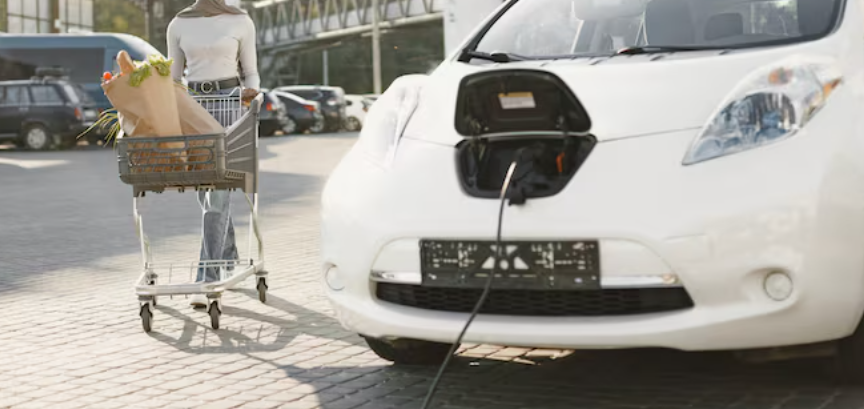
The Ekotejas front fascia and design details reflect the brand’s attention to vehicle build quality across its cargo lineup, where the durability of external components affects long-term commercial operating costs.
Payload, Range, and Grade: The Three Numbers That Matter Most
For a commercial buyer, three specifications dominate the evaluation:
Payload capacity This is the maximum load the vehicle is rated to carry, excluding the driver. Exceeding the rated payload consistently degrades the motor, battery, and suspension faster than any other factor. Always evaluate based on your actual typical load, not maximum occasional load.
Rule of thumb: select a vehicle rated for 20% more than your average operating payload. This buffer protects the drivetrain and extends vehicle life.
Range under load Manufacturers quote range for unloaded or lightly loaded conditions. A cargo three-wheeler carrying 400 kg will deliver meaningfully less range than the same vehicle unloaded. Ask specifically for loaded range data at your expected average payload.
Grade capability If your delivery routes include hills, ramps, or elevated loading docks, motor torque and grade-climbing ability become critical specifications. A vehicle with adequate range on flat roads may struggle on hilly terrain. Confirm grade capability in percentage terms with your dealer, and test this specifically during your evaluation.
Financing Electric Cargo Vehicles in India: Options Available in 2026
Commercial electric vehicle purchases in India in 2026 have more financing options than in previous years.
Bank loans: Most nationalised and private banks offer commercial vehicle loans for electric three-wheelers. Loan-to-value ratios of 80 to 90% are common for commercial applicants with GST registration and ITR filings.
NBFC financing: Non-banking financial companies, including Mahindra Finance, Cholamandalam, and others, have developed EV-specific commercial loan products with lower processing requirements than banks.
Government schemes: PM E-DRIVE and certain state schemes include provisions for commercial EV fleet buyers, including priority subsidy access and, in some cases, concessional loan tie-ups through SIDBI.
Manufacturer financing programmes: Some manufacturers have tie-ups with specific finance partners to offer on-the-spot loan processing at the dealership. Confirm the interest rate and total repayment amount carefully before selecting manufacturer-tied financing.
For buyers evaluating the complete Ekotejas commercial vehicle lineup alongside financing options, the Ekotejas products overview provides the full range of available models and their specifications.
What to Demand From a Commercial EV Dealer That You Would Not Settle For With a Personal Scooter
Commercial buyers have more leverage and more at stake than personal buyers. Here is what to require:
- Written loaded range data at your average payload (not unloaded range claims)
- Documented service turnaround time commitment (critical for fleet operators who cannot afford downtime)
- Spare parts stocking confirmation at the local dealer level, not just central warehouse
- TCO projection document from the dealer showing year-by-year operating cost comparison against petrol equivalent
- Reference contacts from existing commercial fleet customers of the same model
- Clear warranty terms specifically for commercial use (some warranties are voided or limited under commercial registration)
Frequently Asked Questions
For e-commerce last-mile delivery in urban India, a payload of 300 to 500 kg is adequate for most standard parcel loads. For heavier goods or multiple-drop routes, a 500 kg plus capacity is preferable.
Under daily commercial use covering 80 to 100 km per day, a lithium-ion battery pack in a cargo three-wheeler typically requires attention or replacement between 3 and 4 years of regular operation.
Yes. Electric cargo three-wheelers and two-wheelers are registered as commercial vehicles under standard CMVR categories. Registration requirements, including route permits, vary by state and vehicle category.
For high-mileage commercial operations covering 25,000 km or more annually, the payback period on the additional purchase cost over a petrol equivalent is typically 12 to 18 months based on fuel and maintenance savings alone.
Yes, provided the vehicle is selected with adequate ground clearance (minimum 180 mm for cargo vehicles on mixed roads) and payload rating appropriate to the actual operating load. Vehicle selection for non-metro conditions should specifically account for road surface variation.