
College campuses sprawl across hundreds of acres, and walking between classes burns time you don’t have. At large universities, getting from one end of campus to the other can easily take 15–20 minutes on foot. An electric scooter collapses that distance into minutes, but only if you choose one built for actual student life, not marketing specs. This guide cuts through the noise to show you what matters: weight you can carry upstairs, range that survives a full day, and compliance with your campus rules.
The Three-Factor Framework: Weight, Range, and Campus Compliance
Choosing the best electric scooter for college students in 2026 comes down to three things: weight, range, and price. These three factors determine whether your scooter becomes a daily habit or a garage decoration.
Before you evaluate any model, understand your campus rules. Campus electric scooter rules vary widely, and some universities restrict or ban personal scooters entirely on indoor walkways, quads, and building entrances. Before riding an electric scooter for college students to class, check the school’s transportation or parking services page, since violations often carry fines similar to parking tickets.
Weight and Portability: The Stair Test
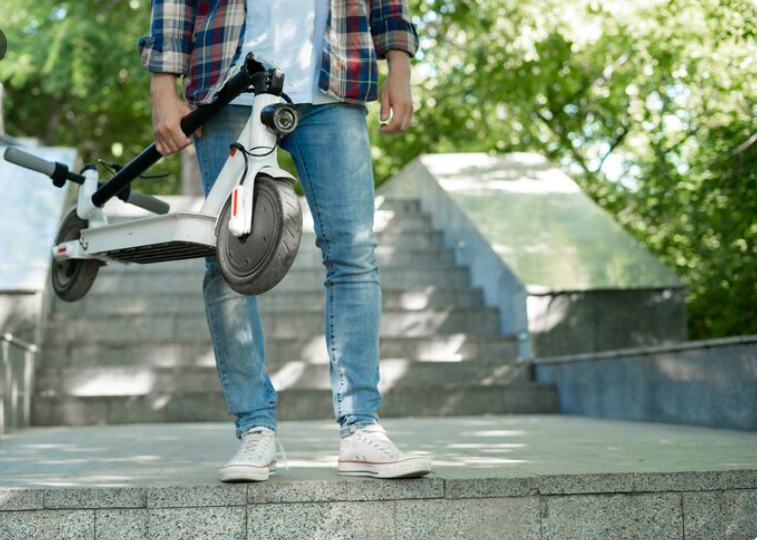
Weight is a huge deal if you live on the third floor, so you have to carry the scooter up stairs and stash it under your desk during lectures. Look for models under 40 pounds; anything heavier becomes a burden on multi-floor dorms. Test the folding mechanism yourself before buying, since some designs fold compactly while others remain bulky even when collapsed.
Real-World Range vs. Manufacturer Claims
A good electric scooter for college should provide at least 15–25 miles (24–40 km) of real-world range on a single charge, enough for a full day of campus commuting. Manufacturer range estimates assume flat terrain and steady speeds; campus life includes hills, stop-and-go riding, and cold weather that drain battery faster. Budget for 60 percent of the advertised range in real conditions, then add a charging station near your dorm for mid-day top-ups.
Safety Certification and Dorm Approval: The UL 2272 Requirement
The U.S. Consumer Product Safety Commission has flagged uncertified lithium-ion devices as a leading cause of dorm and apartment fires, and many universities now require proof of UL 2272 certification before allowing a scooter or e-bike in residence halls. This isn’t optional; it’s a hard gate for dorm storage. Check the product manual or manufacturer website for UL 2272 certification on both the battery pack and charger before purchase.
Battery Fire Risk and Charging Protocols
Boston College similarly limits e-scooter operation to designated roadways and bans charging in dorm common areas due to battery fire risk. Even if your scooter is UL 2272 certified, follow these charging rules: use only the original charger, avoid charging overnight unattended, and never charge in hallways or shared spaces. Keep the charger away from flammable materials and unplug once the battery reaches 100 percent.
Helmet and Lighting Requirements by State
Most states classify electric scooters under 30 mph as low-speed electric scooters, subject to the same helmet and lighting requirements as bicycles for riders under 18. Even if your state doesn’t mandate helmets for adults, wear one anyway; campus sidewalks are crowded and unpredictable. Choose a model with integrated front and rear lights, or budget for aftermarket LED kits.
Speed, Motor Power, and Hill Climbing: Matching Campus Terrain
Most college campuses set speed limits between 10 and 20 mph. Most colleges set speed limits around 15 mph. You rarely need more speed between classes. A 15 to 20 mph scooter balances campus safety with practical commute times. A 250W motor handles flat terrain fine, but a 350W to 500W motor climbs hills without losing momentum. Test your scooter on the actual hills near your campus before committing to a purchase.
Acceleration and Braking Performance
In use, the scooter feels stable and straightforward. Acceleration is smooth rather than jumpy, which is helpful if you are riding near pedestrians or in busy campus areas. Smooth acceleration matters more than raw speed. Dual braking systems (disc and electronic) provide better stopping power than single brakes, especially in wet conditions. Test the brakes on a slight downhill to confirm they feel responsive and predictable.
Tire Type: Solid vs. Pneumatic Trade-offs
Solid tires require zero maintenance. You never get a flat before an exam. Solid tires are practical for students who can’t afford downtime, but they transmit more vibration. Pneumatic (air-filled) tires absorb shocks better and feel smoother, but they can puncture. The 10 inch honeycomb tires combined with dual suspension take the sting out of cracks, bricks, and rough sidewalks. When tested on mixed pavement, the ride stayed smooth and controlled, which makes a big difference when you are riding every day with a backpack. Choose based on your campus surface: solid tires for rough pavement, pneumatic for comfort.
Cost-Per-Mile Analysis and Total Ownership Expenses
Most students find the sweet spot between $400 and $800. A $500 scooter with a 20-mile range costs $25 per mile of range, while an $800 scooter with a 40-mile range costs $20 per mile. Calculate total cost of ownership by adding purchase price, battery replacement (typically $150 to $300 after 2 to 3 years), and brake pads or tire replacements. Budget $50 to $100 annually for maintenance.
Warranty Coverage and Service Accessibility
Feature | Budget Model ($400-600) | Mid-Range Model ($600-900) | Premium Model ($900+) |
Motor Power | 250W-350W | 350W-500W | 500W+ |
Real-World Range | 12-18 miles | 18-28 miles | 28-40+ miles |
Weight | 25-35 lbs | 30-40 lbs | 35-50 lbs |
Warranty | 1 year | 1-2 years | 2+ years |
Charging Time | 4-6 hours | 3-5 hours | 2-4 hours |
Best For | Short campus routes | Mixed terrain, longer commutes | Large campuses, hills |
Budget models suit students with short commutes and tight finances. Mid-range scooters balance performance and price for most campus layouts. Premium models justify their cost only if your campus is sprawling or hilly.
Hidden Costs: Charging, Repairs, and Replacement Parts
Electricity costs are negligible, roughly $0.50 per month if you charge daily. Brake pads cost $20 to $50 and last 6 to 12 months. Tire replacements run $30 to $80 per tire. A scooter battery typically lasts 2–4 years, depending on use, storage, and charging habits. Store your scooter indoors during winter and avoid leaving it in direct sunlight for extended periods, both of which degrade battery health.
Frequently Asked Questions
The University of Maryland’s transportation policy, updated for the 2025–2026 academic year, restricts personal micromobility devices from sidewalks and indoor spaces while requiring registration for outdoor use.
Look for models under 40 pounds.
Most students find the sweet spot between $400 and $800.
UL 2272 is the safety standard that tests an electric scooter’s battery, charging system, and electrical components for fire and short-circuit risks.
Most electric scooters can be safely charged in dorm rooms using the original charger. Always follow campus safety guidelines and keep chargers away from flammable materials.