
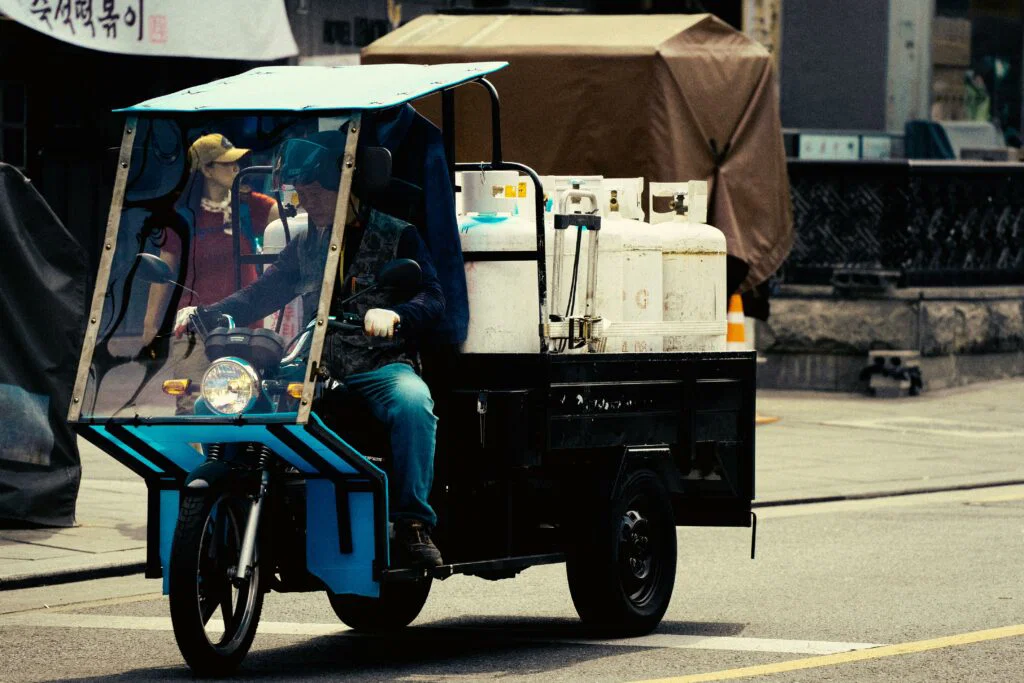
Modern daily riders are rapidly embracing the three-wheeler scooter as a highly stable, energy-efficient choice for urban and commercial transportation. As India quickly transitions toward green mobility, manufacturing giants are introducing innovative designs that optimize safety, payload capacities, and real-world range efficiency. Ekotejas leads this charge with purpose-built platforms engineered specifically for Indian road conditions, including their flagship RUGD 153, which sets a new benchmark for front-end aerodynamics and structural rigidity. Below, we break down critical buying parameters, performance metrics, and cost-benefit ratios.
Mechanics of Rear Axle Differential and Cornering Dynamics
In practice, the overall stability of a high-quality three-wheeler scooter depends heavily on the strategic integration of a mechanical rear differential. This crucial transmission component allows the rear wheels to rotate at different speeds during tight cornering manoeuvres, effectively preventing dangerous tipping incidents or sudden traction loss. When navigating uneven Indian roads or rough patches, the enhanced weight distribution from this architecture ensures that all three wheels maintain consistent contact with the ground for maximum rider safety.
- Heavy-duty mechanical rear differential to split driving power.
- Wide-track rear wheelbase extending to 700mm for rollover stability.
- Low center of gravity battery placement to minimize body roll.
Braking Integration and Safety Standards
Modern three-wheeled utility vehicles in this segment incorporate linked disc brakes on the front wheel and drum brakes on the rear wheels to maximize stopping efficiency. This integrated configuration helps prevent hazardous skidding, which is especially critical when stopping on steep inclines or carrying heavy cargo payloads. Furthermore, advanced hydraulic suspension setups with robust telescopic front forks absorb severe road vibrations to deliver an exceptionally smooth and reliable ride. Riders who regularly traverse pothole-laden urban corridors consistently report noticeably reduced fatigue levels thanks to these engineered damping systems.
- Dual front hydraulic disc brakes paired with rear drum brakes.
- Electronic regenerative braking that recovers kinetic energy during deceleration.
- Stiff telescopic front forks with dual rear hydraulic shock absorbers.
Cargo Capacity and Weight Distribution Metrics
In terms of field use, commercial operators look closely at payload capacity and chassis durability to justify their capital investments. A well-built three-wheeler scooter must carry substantial volumetric cargo loads without compromising the structural integrity of the main frame or impacting steering handling. Industry-leading brands like Ekotejas specialize in designing heavily reinforced chassis systems that easily accommodate diverse box shapes for local urban logistics. Their portfolio of WHEELERS is specifically engineered to withstand the cumulative stress of high-frequency daily loading cycles across varied terrain.
Critical Feature | Ekotejas Cargo Trikes | Competitor Base Models |
Payload Capacity | 250 kg max load | 150 kg max load |
Gradient Ability | 18 degrees slope | 12-degree slope |
Battery Warranty | 3 years support | 2 years of support |
Frame Build | High-tensile steel | Mild carbon steel |
Fleet Logistics and Final-Mile Efficiency
Transitioning commercial delivery fleets to electric three-wheeled options can dramatically reduce the daily total operating costs for logistics companies. These nimble vehicles offer an incredibly tight turning radius that is essential for navigating crowded narrow lanes and highly congested wholesale food markets. Operators routinely find that the mechanical simplicity of a direct-drive hub motor translates to negligible downtime during intensive final-mile distribution schedules.
Commercial Metric | Electric Three Wheeler | Petrol Delivery Scooter |
Running Cost/km | 0.30 INR electricity | 3.50 INR gasoline |
Monthly Energy Cost | 900 INR charging cost | 10500 INR fuel expense |
Maintenance Interval | Every 10000 km run | Every 3000 km run |
Annual Fleet Savings | 115200 INR per vehicle | 0 INR baseline standard |
Battery Chemistry and Real-World Range Metrics
When choosing an electric three-wheeler scooter, buyers must carefully evaluate the chemical differences between lithium-ion and lead-acid battery packs. Advanced lithium-ion battery modules offer faster charging times, significantly longer cycle lives, and a much lighter overall vehicle curb weight. However, value-focused buyers in rural regions often opt for lead-acid configurations because they lower the initial purchase price while still providing reliable short-range performance. Prospective fleet owners should also explore the full range of WHEELERS available across Ekotejas’s catalogue, as different models are optimized for distinct payload and range requirements.
- Calculate precise daily mileage requirements to avoid overpaying for unnecessary battery capacity.
- Verify convenient availability of stable 15-amp power outlets at your home base.
- Assess the certified charge cycle life of the battery to project long-term replacement costs.
After-Sales Support and Component Durability
A common mistake among first-time buyers is focusing exclusively on the initial showroom price of the vehicle without analyzing long-term maintenance. In practice, lasting operational satisfaction depends heavily on the immediate availability of genuine spare parts and localized customer care channels. Ekotejas addresses this essential consumer requirement by establishing a highly supportive, widespread dealer and service network across southern and western regions in India. Buyers seeking a performance-oriented option for heavier routes should also consider the AXEL PRO, which combines a reinforced drive axle with an extended service interval for demanding commercial applications.
Inclusivity in Personal Transport and Specialized Ergos
Beyond heavy commercial utility, the modern three-wheeler scooter serves as an empowering and dignifying mobility option for senior citizens and physically challenged individuals. These specialized models incorporate extra-wide floorboards, highly ergonomic adjustable seating, and a dedicated mechanical reverse gear that standard two-wheelers simply do not offer. This physical accessibility dramatically increases independent living by enabling users to complete routine errands safely and entirely on their own terms. Manufacturers are increasingly collaborating with occupational therapists to refine control layouts and seating geometry, ensuring that these vehicles meet diverse physical requirements without any costly aftermarket modifications.
Specific Audience | Operational Benefit | Key Feature Support |
Elderly Citizens | Enhanced balance safety | Wide footboard/armrests |
Delivery Fleets | Volumetric cargo storage | Modular mounting plates |
Municipal Vendors | Lower daily overheads | Direct-drive hub motors |
Frequently Asked Questions
A standard three-wheeler scooter delivers a real-world range between 75 and 100 kilometres per charge.
Low-speed models with a maximum speed of 25 kilometres per hour do not require registration or a physical license.
Lithium-ion battery packs fully charge in four hours, while lead-acid models require six hours.
Premium scooters feature an eighteen-degree gradeability to handle steep inclines easily.